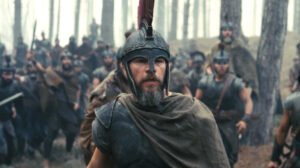
Christopher Nolan’s The Odyssey Is the Film the Internet Misjudged — And the Box Office Is Already Proving It
For much of the past year, it felt as though Christopher Nolan’sThe Odyssey was fighting a battle long before audiences ever stepped inside a cinema.
Long before the review embargo lifted, the conversation surrounding the film had become dominated by social media debates rather than the film itself. Casting choices were scrutinised, rumours spread at remarkable speed, and almost every new piece of marketing seemed to trigger another round of online discourse. It was, by some distance, the most controversial pre-release campaign of Nolan’s career.
What makes the situation fascinating is not simply that the criticism existed. Hollywood blockbusters attract controversy all the time. The difference with The Odyssey was the sheer volume of negativity directed towards a film that almost nobody outside Universal Pictures had actually seen.
For months, public opinion was shaped less by footage and more by assumptions. Having now watched the finished film, one conclusion becomes difficult to ignore. The internet and the finished product feel like two entirely different stories.
A Film That Defies Its Own Reputation
One of the biggest surprises about The Odyssey is how quickly it distances itself from the noise that surrounded its production.
Yes, the opening half hour is slower than many audiences may expect. Christopher Nolan deliberately takes his time establishing relationships, motivations and the emotional landscape before allowing the narrative to unfold fully. That patience may frustrate viewers expecting immediate spectacle, but once the story settles into its rhythm, the film transforms into the kind of sweeping cinematic experience that has become synonymous with Nolan’s work.
The scale is extraordinary.
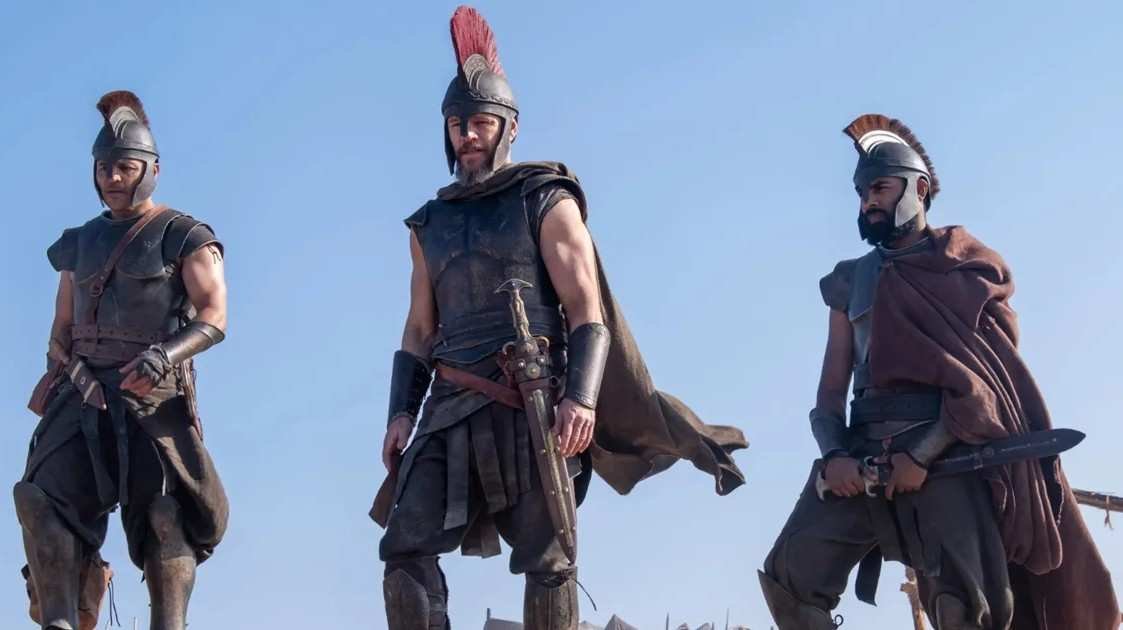
Every location feels tangible, every battle carries genuine weight, and the practical ambition behind the production is visible in almost every frame. Nolan has always favoured immersive filmmaking over digital excess, and The Odyssey continues that philosophy with remarkable confidence.
This is not simply a film designed to be watched.
It is designed to be experienced.
Premium large-format screens are not merely a marketing tool here; they are fundamental to how the film communicates its sense of scale. Few modern directors understand theatrical presentation better than Nolan, and The Odyssey reinforces why audiences continue to seek out his films as cinematic events rather than just another Friday night release.
The Performances Quietly Become the Film’s Greatest Strength
Perhaps the biggest surprise is not the spectacle but the performances.
An ensemble of this size naturally invites scepticism. With so many recognisable faces sharing the screen, there is always the danger that audiences spend more time identifying celebrities than believing in characters.
Initially, that concern has some merit. During the opening act, viewers may find themselves adjusting to seeing such a familiar collection of Hollywood stars inhabiting ancient Greece. Gradually, however, something changes. The actors disappear. The characters emerge.
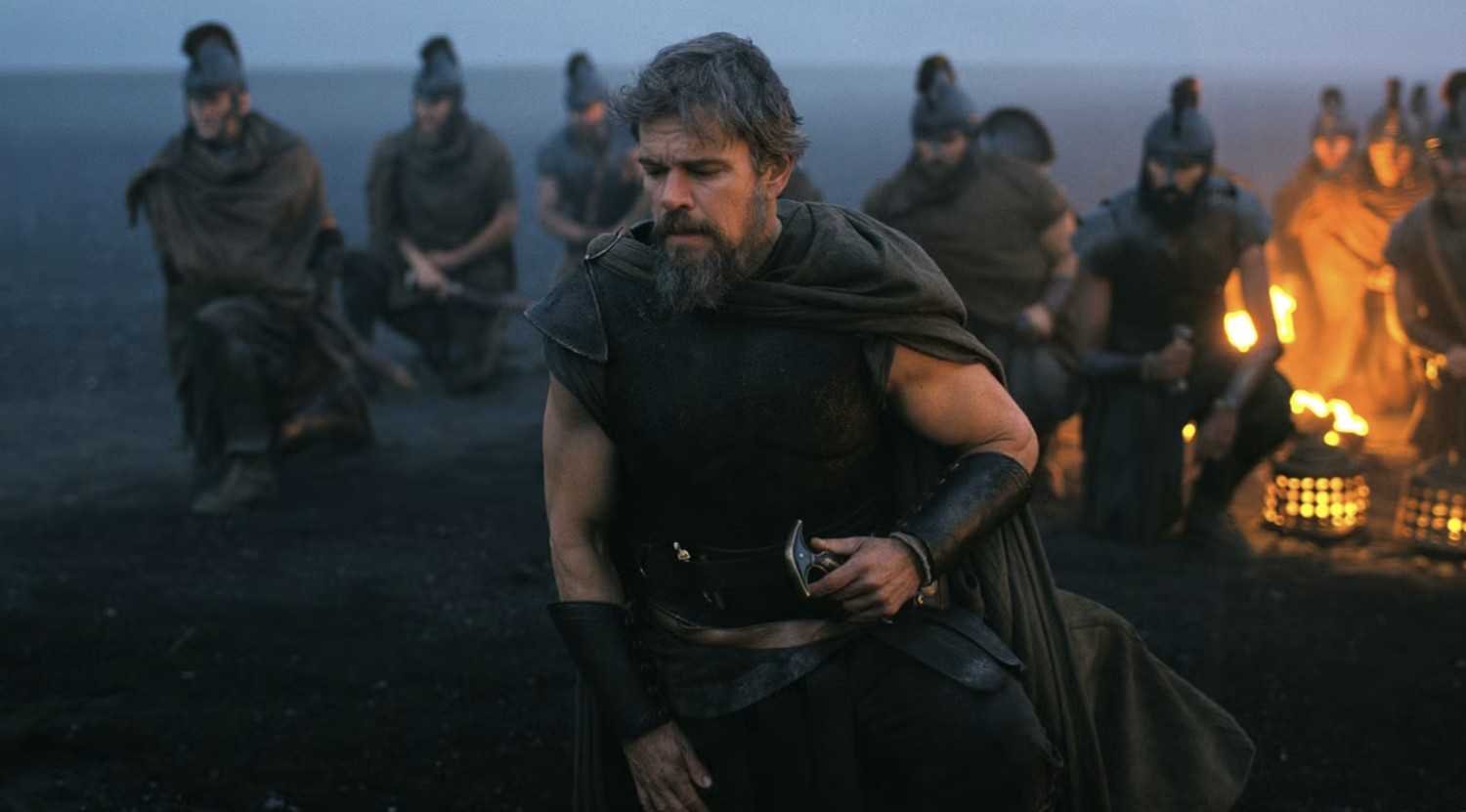
Matt Damon anchors the entire production with remarkable assurance, delivering a restrained performance that allows the emotional weight of the story to develop naturally rather than relying on theatrical excess. Rather than attempting to dominate every scene, he becomes the emotional constant around which Nolan builds the film’s expansive world.
Whether it ultimately becomes regarded as the finest performance of Damon’s career remains to be seen, but it unquestionably belongs in that conversation.
Equally impressive is the consistency across the supporting cast. Regardless of the pre-release headlines, there are remarkably few weak links. Every major performer appears fully committed to Nolan’s vision, creating an ensemble that ultimately feels far stronger than many expected.
When Online Debate Collides With Reality
Perhaps the most revealing aspect of The Odyssey is how little many of the internet’s biggest talking points ultimately matter once the lights go down.
Months of online discussion created the impression that certain casting decisions would fundamentally undermine the film. That simply isn’t reflected in the finished product.
Much of the controversy surrounding Elliott Page, Travis Scott and Lupita Nyong’o became defining topics across social media despite representing relatively modest components of the overall narrative. Each performer fulfils their respective role competently without disrupting the story’s momentum, illustrating how pre-release discourse can sometimes distort audience expectations far beyond what ultimately appears on screen.
This is not an argument that audiences should never question casting decisions or creative choices. Healthy debate remains part of cinema culture.
However, The Odyssey demonstrates the danger of allowing speculation to replace genuine criticism. Judging a film before it exists often says more about internet culture than it does about filmmaking.
The Box Office May Already Be Delivering the Final Verdict
The greatest irony surrounding The Odyssey may not come from the reviews.
It may come from the box office.
Despite months of relentless criticism, the film has begun its theatrical journey with remarkable momentum. Early U.S. preview screenings generated approximately $15 million, comfortably surpassing the $10 million preview figure achieved by Oppenheimer during its opening previews. Industry forecasts also point towards a worldwide opening exceeding $200 million, underlining the extraordinary level of audience interest despite the prolonged controversy.
That statistic alone raises an intriguing possibility.
Could Christopher Nolan’s most controversial film also become his most commercially successful?
Only time will provide the definitive answer, but the irony is impossible to ignore.
No modern filmmaker appears to attract pre-release debate quite like Nolan. Yet each successive project seems to reinforce rather than weaken audience confidence in his work. If The Odyssey continues its current trajectory, it could surpass expectations in precisely the same way that Oppenheimer exceeded industry predictions three years earlier.
The Nolan Effect Remains Unique
Hollywood has spent much of the past decade searching for filmmakers capable of selling original cinema on name recognition alone. Very few exist. Christopher Nolan remains one of them. Audiences are not simply buying tickets to watch Homer brought to life on screen. They are buying into the promise that Nolan will deliver an experience worth leaving home for. In an era increasingly dominated by streaming platforms, franchise fatigue and shrinking theatrical windows, that level of trust has become exceptionally rare.
The Odyssey reinforces that relationship. It is not a flawless film. The deliberate opening act may test the patience of some viewers, and adjusting to such a star-studded ensemble takes time. Yet those reservations gradually give way to an emotionally engaging, visually astonishing epic that reminds audiences why cinema still possesses a unique power when filmmakers fully embrace its possibilities.
Perhaps the greatest lesson from The Odyssey has nothing to do with ancient mythology. It is a reminder that films should still be judged inside the cinema rather than inside an algorithm. For months, The Odyssey appeared destined to become Christopher Nolan’s most divisive project.
Instead, it may ultimately be remembered as the film that demonstrated, once again, that internet outrage and audience enthusiasm are not always telling the same story. And if its record-breaking preview figures are any indication, the journey may only just be beginning.