Christopher Nolan’s The Odyssey Faces Growing Scrutiny Over Casting and Authenticity
Christopher Nolan has spent more than two decades building one of the most remarkable careers in modern filmmaking. Few directors command the level of anticipation that accompanies every new project bearing his name. From The Dark Knight trilogy and Inception to Interstellar and the Academy Award-winning Oppenheimer, Nolan has earned a reputation for delivering cinematic experiences that challenge audiences while dominating the global box office.
That reputation, however, also creates an extraordinary burden.
Every new Christopher Nolan film is judged against an almost impossible standard, and his upcoming adaptation of The Odyssey may prove to be his most closely scrutinised project yet. Long before audiences have taken their seats, the film has become the centre of passionate debate, with discussions ranging from casting decisions and historical authenticity to whether Hollywood’s growing dependence on star power is beginning to undermine epic storytelling.
I believe the conversation surrounding The Odyssey says just as much about modern blockbuster filmmaking as it does about the film itself.
The Weight of Expectation
Adapting Homer’s The Odyssey is an enormous creative undertaking. The ancient Greek epic has influenced literature, theatre and cinema for centuries, making it one of the most recognisable stories ever written.
Unlike original screenplays, adaptations of iconic works arrive with deeply established audience expectations. Fans already have their own vision of legendary characters, mythical worlds and historical settings. Every casting announcement, costume reveal and trailer is therefore examined with exceptional scrutiny.
For Christopher Nolan, whose previous films have consistently raised the bar for blockbuster filmmaking, expectations are arguably higher than ever.
Casting Has Become the Story
One of the most noticeable aspects of the pre-release conversation has been the focus on casting rather than storytelling. Christopher Nolan has assembled an ensemble featuring some of Hollywood’s biggest names, including Tom Holland, Zendaya, Robert Pattinson, Matt Damon and Anne Hathaway. Individually, each actor has demonstrated remarkable talent throughout their careers. Collectively, however, the question being asked by many film fans is whether recognisable celebrity status risks overshadowing the characters themselves.
Historical epics often rely on audience immersion. The strongest examples transport viewers into another civilisation, allowing performances to eclipse celebrity recognition. Some critics argue that when audiences immediately recognise modern blockbuster icons, suspension of disbelief becomes more difficult to achieve.
Whether that concern proves justified remains to be seen, but it has undoubtedly become one of the defining conversations surrounding the production.
Authenticity Matters in Historical Epics
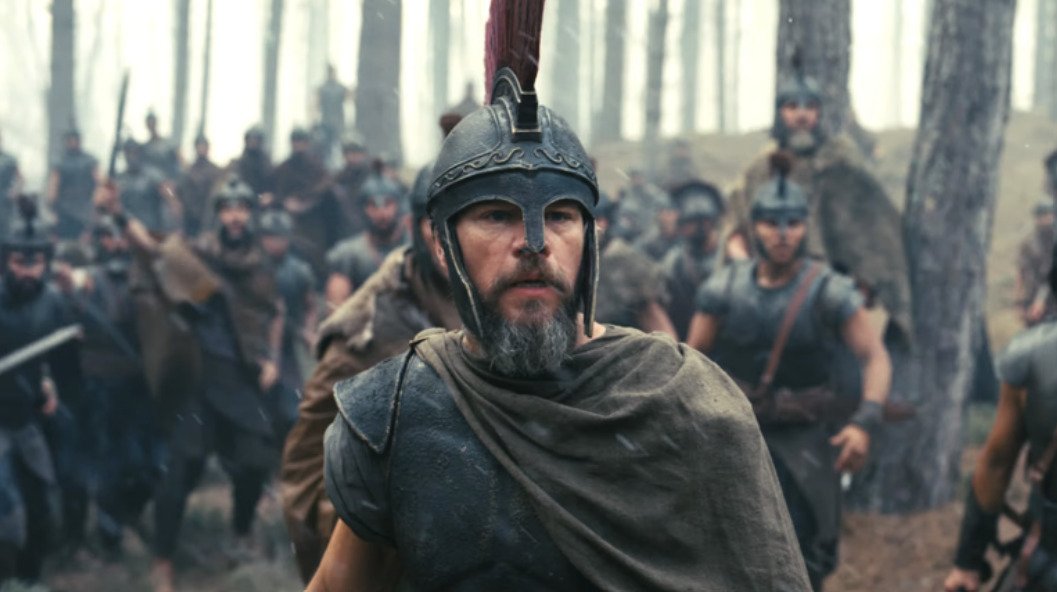
Another recurring topic centres on authenticity. While The Odyssey is rooted in mythology rather than documented history, successful historical fantasy still depends on convincing world-building. Costume design, production aesthetics, dialogue and performance style all contribute to creating a believable cinematic universe.
Some promotional material has prompted discussion over whether the film leans too heavily into contemporary Hollywood sensibilities instead of embracing the distinctive atmosphere associated with ancient Greece. It is important to recognise that complete historical accuracy has never been Christopher Nolan’s objective. Every filmmaker balances authenticity with accessibility for modern audiences. Nevertheless, authenticity remains one of the qualities audiences frequently value most in large-scale historical storytelling.
The Challenges of Modern Blockbusters
The debate surrounding The Odyssey also highlights a broader trend across Hollywood. Studios increasingly rely on globally recognised actors to market expensive productions. From a commercial perspective, the strategy makes sense. Familiar faces attract media attention and broaden international appeal. However, there is another side to that equation. Some of cinema’s greatest historical epics succeeded because audiences stopped seeing actors and instead believed entirely in the characters occupying those worlds. When casting becomes one of the dominant talking points before release, filmmakers inevitably face greater pressure to demonstrate that those creative choices ultimately serve the story.
This is not a challenge unique to Christopher Nolan. It reflects a wider conversation taking place across the film industry about balancing commercial appeal with artistic immersion.
The Odyssey: Why Christopher Nolan’s Most Controversial Film Could Become His Biggest Success
A Film That Will Divide Opinion?
Predicting audience reception before release is always difficult. Christopher Nolan has repeatedly surprised critics throughout his career, and few filmmakers possess his ability to combine ambitious storytelling with spectacular filmmaking.
There is every reason to believe The Odyssey will feature breathtaking visuals, remarkable practical filmmaking and memorable large-scale set pieces.
Whether those strengths are enough to overcome ongoing concerns surrounding casting and authenticity remains an open question.
One thing is already clear: The Odyssey is unlikely to be met with indifference.
Few upcoming films have generated such extensive discussion months before release, and that level of engagement alone demonstrates the cultural significance Christopher Nolan continues to hold within contemporary cinema.
Ultimately, audiences—not online debate—will determine where The Odyssey sits within Christopher Nolan’s remarkable body of work.
Until then, it remains one of the most fascinating and hotly debated films on the horizon.