The Reality Gap: Why Trump’s “Hollywood” Vision for the Iran Conflict is Spiralling into Global Chaos
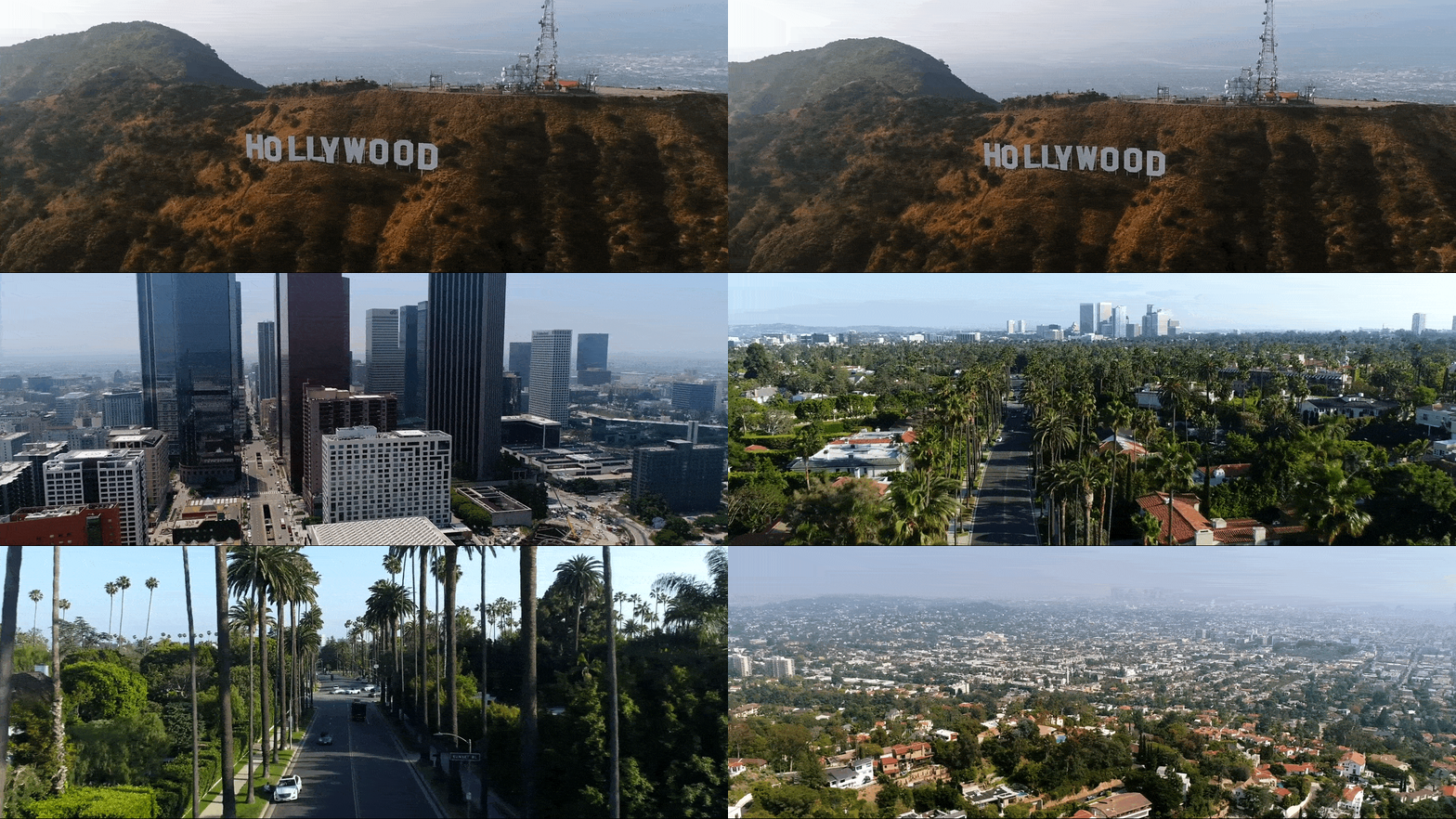
In the world of cinema, a conflict is often resolved in a tidy 90-minute arc. There is a clear objective, a decisive strike, and a triumphant finale. But as the events of March 2026 are proving, the Oval Office is not a film set, and modern warfare does not follow a screenplay. President Donald Trump, who recently rated the progress of the U.S.-led intervention in Iran as a “15 out of 10,” is finding that his assumption of a quick, concise victory has collided with the grim, messy reality of a geopolitical stalemate.
What was intended to be a precision effort by U.S. and Israeli forces to topple the Iranian regime has instead devolved into what observers are calling a “chaotic nightmare.” The spiraling conflict has not only dragged in global superpowers but has begun to fracture the very domestic base that propelled Trump back to power.
The Miscalculation of Resistance
The administration’s initial strategy appeared to rest on the belief that a show of overwhelming force would lead to a swift internal collapse of Tehran’s leadership. However, Iran has demonstrated a level of resourcefulness and defensive “fight” that far exceeds the White House’s projections. Rather than a localized regime change, the conflict has expanded into a grueling war of attrition.
The messiness has arrived fast. The U.S. military, now deeply embedded in the region alongside Israel, is facing a sophisticated network of proxy resistance and high-tech defensive capabilities. This is not the “concise victory” promised in campaign rhetoric; it is a sprawling, multidimensional war that is quickly exhausting conventional resources.
A Global Dominated Landscape
The dangers of this moment are no longer confined to the Middle East. The conflict is effectively “going global.” Russia has issued chilling warnings regarding a “nuclear catastrophe,” with President Putin using the chaos to humiliate the U.S. position on the world stage. Meanwhile, the “Special Relationship” with the United Kingdom is under unprecedented strain. Prime Minister Keir Starmer’s silence—and Trump’s subsequent “savaging” of the PM—suggests that even America’s most loyal allies are hesitant to be dragged into a war without a clear exit strategy.
As tensions rise, the risk of a third World War is no longer a fringe theory discussed by psychics and doomsday preppers; it is a daily topic in diplomatic cables and high-level defense briefings.
The Economic Toll at Home
For the average American, the war is being felt most acutely at the gas pump and in the supermarket aisles. Despite the President’s assertion that surging costs are a “small price to pay” for global security, the data tells a more painful story. Oil prices have surged above $100 a barrel, marking the sharpest jump in decades.
Domestically, the February jobs report delivered a staggering blow: over 90,000 jobs lost as the stock market takes a nosedive. When the economy suffers, the public expects a leader focused on fiscal stabilization. Instead, critics point to a “meltdown” within the White House. Reports of the President spending his time attacking TV hosts like Bill Maher on social media rather than addressing the loss of American livelihoods have fueled the narrative that he is “in over his head.”
The MAGA Fracture
Perhaps most surprising is the burgeoning dissent within the President’s own ranks. Dedicated MAGA followers, typically known for their unwavering loyalty, are beginning to voice public criticism. Figures like Marjorie Taylor Greene have questioned the President’s “mental state” and the strategic goal of the intervention.
The sentiment among the base is shifting: many voted for an “America First” policy of non-intervention and economic prosperity. Seeing the U.S. economy haemorrhaging while being “coaxed into a war” with no clear plan has led to a record-low approval rating. Even Trump’s niece has publicly speculated that the attack on Iran was driven by personal ego rather than national security, further damaging the administration’s credibility.
The Looming Final Act
As tourists remain stranded and international shipping routes are disrupted, the question remains: how does this end? The President continues to project confidence, insisting the U.S. has the “greatest military in the world,” but military might alone cannot fix a broken global economy or restore a fractured special relationship.
The reality of 2026 is that the “quick victory” was a mirage. The war in Iran has become a test of endurance that the United States was not prepared for. Unless a pivot toward diplomacy or a definitive strategic goal is established, the “nightmare” described by observers may only be in its opening scene. For a President who prizes strength and image above all else, the current spiral of domestic and international crises is proving to be a script he cannot easily rewrite.