
Inside the Record-Breaking Budget of ‘Avengers: Doomsday’: RDJ’s Return, Global Shoots, and the Cost of Saving the MCU
In the high-stakes poker game of Hollywood blockbusters, Marvel Studios has just pushed all its chips to the center of the table. Following a turbulent few years defined by “superhero fatigue” and fluctuating box office returns, Disney is reportedly doubling down—literally—on its crown jewel. Exclusive reports and industry insiders now suggest that the production budget for the upcoming Avengers: Doomsday has ballooned in excess of $980 million, a figure that shatters previous records held by Star Wars: The Force Awakens and Jurassic World: Fallen Kingdom. When factoring in a global marketing campaign estimated between $200 million and 300 million, and it represents a pivotal “do or die” moment for the Marvel Cinematic Universe (MCU). Due to these over inflated budgets Disney will need to make in excess of $2 Billion in the global box office for this to even come close to being a financial success.
The “Legacy Premium”: Paying for the Kings of the Genre
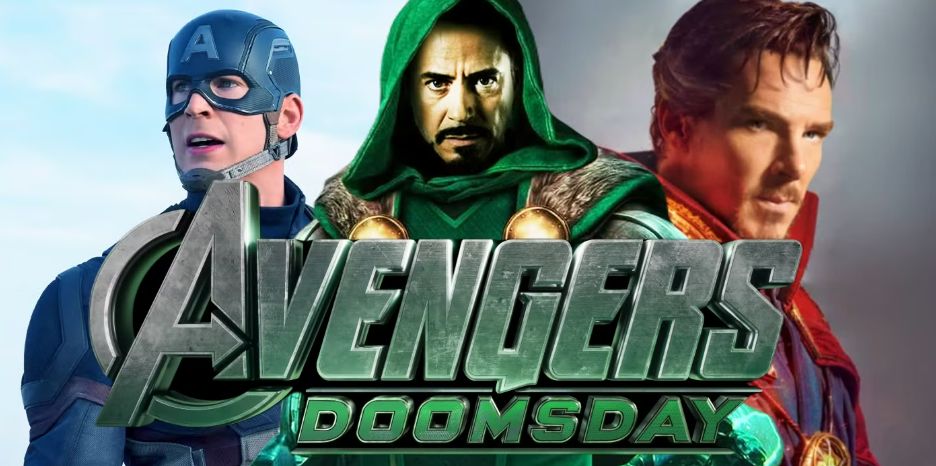
The primary driver of this astronomical price tag is clear to anyone paying attention to the casting sheet: the return of the prodigal son. The shock announcement that Robert Downey Jr. would return to the franchise—not as the beloved Tony Stark, but as the villainous Doctor Doom—sent shockwaves through the fandom, but it also sent tremors through Disney’s accounting department.
Sources close to the production indicate that securing Downey Jr., along with the return of the Russo Brothers to the director’s chairs, commanded a significant percentage of the above-the-line budget. In an era where star power has allegedly diminished, Marvel is betting that the old guard is the only way to usher in the new era.
“You aren’t just paying for an actor; you are paying for an insurance policy,” says one senior production analyst. “Bringing Downey back ensures a $1 billion floor for the box office. His salary, rumored to be in the $80M+ range including backend points, along with heavyweights like Chris Hemsworth and Tom Holland, means the film costs $150 million before a single camera starts rolling.”
Visual Effects: The Cost of Building a Multiverse
While star salaries garner headlines, the below-the-line costs for Avengers: Doomsday reveal a studio attempting to correct the visual criticisms of Phases 4 and 5. Marvel has faced backlash recently for “crunch culture” in VFX houses and CGI that felt rushed. For Doomsday, the mandate appears to be perfection at any price.
The budget allocation for Visual Effects is estimated to hover between $100 million and $150 million. This is not merely for laser blasts and explosions; the script reportedly calls for entirely synthesized realities, AI-augmented environments, and the rendering of complex, multiverse-spanning battlegrounds that blend practical sets with digital wizardry.
Filming has taken the production global, moving away from the “Volume” soundstages in Atlanta to on-location shoots in London, New York, Vancouver, and Seoul. This return to physical location shooting—allocated at roughly $75 million of the budget—signals a desire to ground the fantastical story in tactile reality, a lesson learned from the gritty success of competitors like The Batman.
The “Too Big to Fail” Economics
Why spend over $900 million on a single product? The answer lies in the current state of the theatrical business. In late 2025, the mid-budget movie has all but migrated to streaming. Theaters rely entirely on “event cinema”—films that demand a communal viewing experience.
Marvel is acutely aware that Avengers: Doomsday needs to be more than a sequel; it needs to be a cultural reset. Following the mixed reception of The Marvels and Ant-Man and The Wasp: Quantumania, the brand’s invincibility cloak has frayed. This budget is a defensive maneuver. By outspending everyone else, Marvel is attempting to “buy” the awe and spectacle that defined Avengers: Endgame.
However, the break-even point for Avengers: Doomsday is now theoretically astronomical. Using the standard industry multiplier (2.5x production budget to account for theater cuts and marketing), the film likely needs to gross $1.1 billion just to turn a profit. While an Avengers film hitting a billion used to be a guarantee, the post-pandemic landscape makes this a riskier proposition.
Marketing the Apocalypse
The reported $200 million marketing war chest is already being deployed. With a release date slated for May 2026, the hype cycle is beginning earlier than usual. We are seeing a strategy that mirrors the rollout of Avatar: The Way of Water—a slow, deliberate drip-feed of content designed to rebuild trust with the audience.
Disney is planning Super Bowl takeovers, massive tie-ins with global tech brands, and an immersive digital campaign that utilizes the “multiverse” concept to deliver personalized ads to users. This isn’t just advertising; it’s dominance.
The Verdict: Hollywood Watches with Bated Breath
As production continues through the winter of 2025, the entire industry is watching. If Avengers: Doomsday succeeds, it validates the “mega-blockbuster” model, proving that audiences will show up if the spectacle is big enough and the stars are bright enough. If it underperforms, it could signal the end of the $400M+ budget era, forcing a complete restructuring of how Hollywood makes tentpole films.
For Kevin Feige and the team at Disney, the check has been written. Now, they have to deliver a movie that is worth more than the GDP of a small island nation.