
Warner Bros. CEO Says ‘Not For Sale,’ But Wall Street and Hollywood Are Betting Otherwise
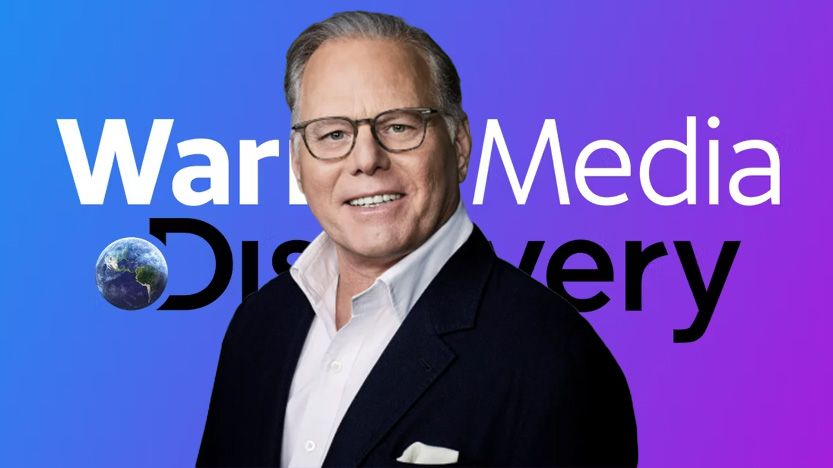
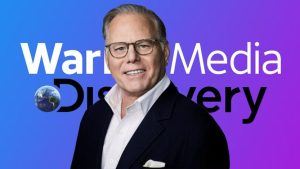
In a move designed to douse a wildfire of market speculation, Warner Bros. Discovery (WBD) CEO David Zaslav has issued a definitive public statement: “We are not for sale.” The declaration, delivered with forceful intent, comes after weeks of frenzied rumors about a potential mega-merger that sent the company’s stock soaring. But in the high-stakes poker game that is modern Hollywood, Zaslav’s words are being scrutinized not just for what they say, but for what they strategically leave unsaid. This isn’t just a denial; it’s a calculated power play designed to control the narrative of what many see as an inevitable industry consolidation.
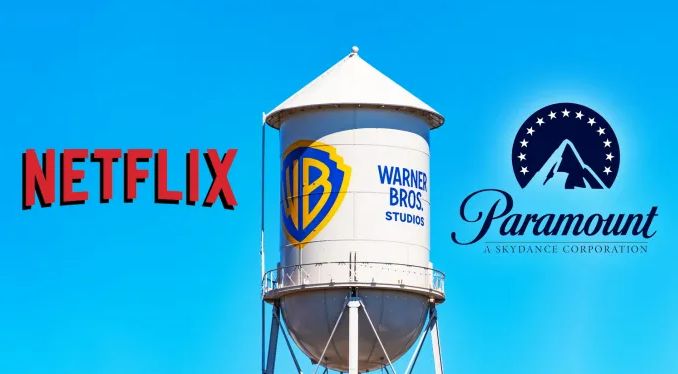
For weeks, Wall Street and Hollywood have been captivated by the prospect of a monumental bidding war for Warner Bros. Discovery. Names like Paramount Global and the streaming titan Netflix have been whispered as potential suitors, each looking to acquire WBD’s legendary “crown jewel” assets—the Warner Bros. film and TV studios, the prestige content engine of HBO, and a universe of invaluable IP including DC Comics. The market’s excitement was palpable, with WBD’s stock price climbing on the belief that a sale was not a matter of if, but when and for how many billions.
Zaslav’s statement is a direct attempt to slam the brakes on that narrative. His focus, he insists, is not on a sale but on a long-term strategy of “organic” growth and aggressive debt reduction. He emphasized the monumental task already accomplished, having paid down over $35 billion in debt since the chaotic WarnerMedia-Discovery merger he orchestrated. “We are builders,” Zaslav declared, positioning himself as a leader focused on strengthening the company from within, not preparing it for the auction block. His vision, he claims, is fixed on 2026 and beyond, a future where WBD stands on its own as a healthy, profitable, and independent media giant.
However, the reality of the media landscape tells a different, more complicated story. The brutal streaming wars have fundamentally altered the business, creating a “scale or fail” environment where consolidation is seen as the only path to long-term survival. The market’s euphoric reaction to the merger rumors was not just speculation; it was a reflection of this widely held belief. Wall Street sees a combined WBD-Paramount or a Netflix-WBD as a more viable and powerful competitor against giants like Disney and Amazon.
This is the central tension in Zaslav’s declaration. He is publicly preaching stability and independence while the entire industry is hurtling towards an era of mega-conglomerates. His “not for sale” statement can therefore be interpreted in several ways. It could be a genuine belief in his long-term plan. More likely, however, it is a shrewd negotiation tactic. By publicly taking the company off the market, Zaslav cools the immediate frenzy, giving him time to continue improving the balance sheet and, in doing so, dramatically increasing the company’s valuation. “Not for sale” today could very well mean “for sale at a much higher price” tomorrow.
The outcome of this saga will represent a new dawn for Hollywood. The era of the “Big Five” studios is already a memory; the future will be dominated by a “Big Three” or “Big Four” content fortresses. The conclusion of the streaming wars is not a victory for consumer choice but a consolidation of power into the hands of a few gatekeepers. A potential sale of Warner Bros. Discovery is the final, dramatic act in this transformation.
If a merger does eventually happen, the Hollywood landscape will be permanently redrawn. A combination with Paramount would create a legacy media behemoth, merging two of Hollywood’s most historic lots and libraries. An acquisition by Netflix would be an even more profound paradigm shift—the ultimate victory of the disruptor, as the streaming giant swallows a 100-year-old studio and its most prestigious assets. Such moves would have massive ripple effects, leading to fewer buyers for creative projects, more risk-averse greenlight decisions, and a less diverse content ecosystem. Any such deal would also face a monumental battle with the Department of Justice (DOJ) over antitrust concerns.
For now, David Zaslav is holding the line. He has made his public statement and is betting that his strategy of fiscal discipline will create more value than a quick sale. But the pressures of the market and the undeniable logic of consolidation are a powerful tide. He may have built a temporary dam, but the floodwaters are still rising. The question is not whether Hollywood will change, but who will be left standing when it does.